
 COACHING RUNNERS
THROUGH EVERY SEASON ·
THE TRIANGLE, NC & WORLDWIDE
 COACHING RUNNERS
We’ve all scrolled through social media and seen chatter about heart rate training or new gadgets and trackers and wondered what’s the real deal about all of this? How accurate is heart rate training? Why is low heart rate the hot topic on some influencers’ stories? Are the heart rate tracker tools really worth it?
TLDR… going off heart rate alone isn’t going to bring you the most success. There are a few reasons why.
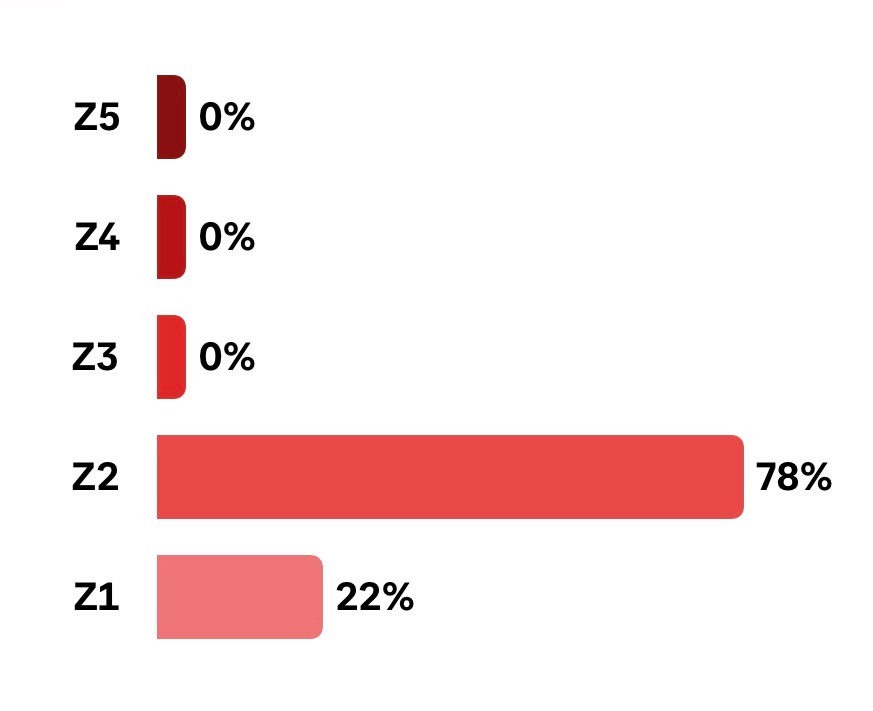
The above HR Zones graph from Strava would reflect an easy base run.
Many runners believe that measuring their heart rate (HR) is critical to improvement in performance. Seeing that constant praise for low heart rate training can lead us to think that it’s essential to track this measurement, but we’re here to tell you that through all the obsession with numbers and tracking gadgets many of us have forgotten how to run by feel. When it comes to your heart rate, there is no “normal.”
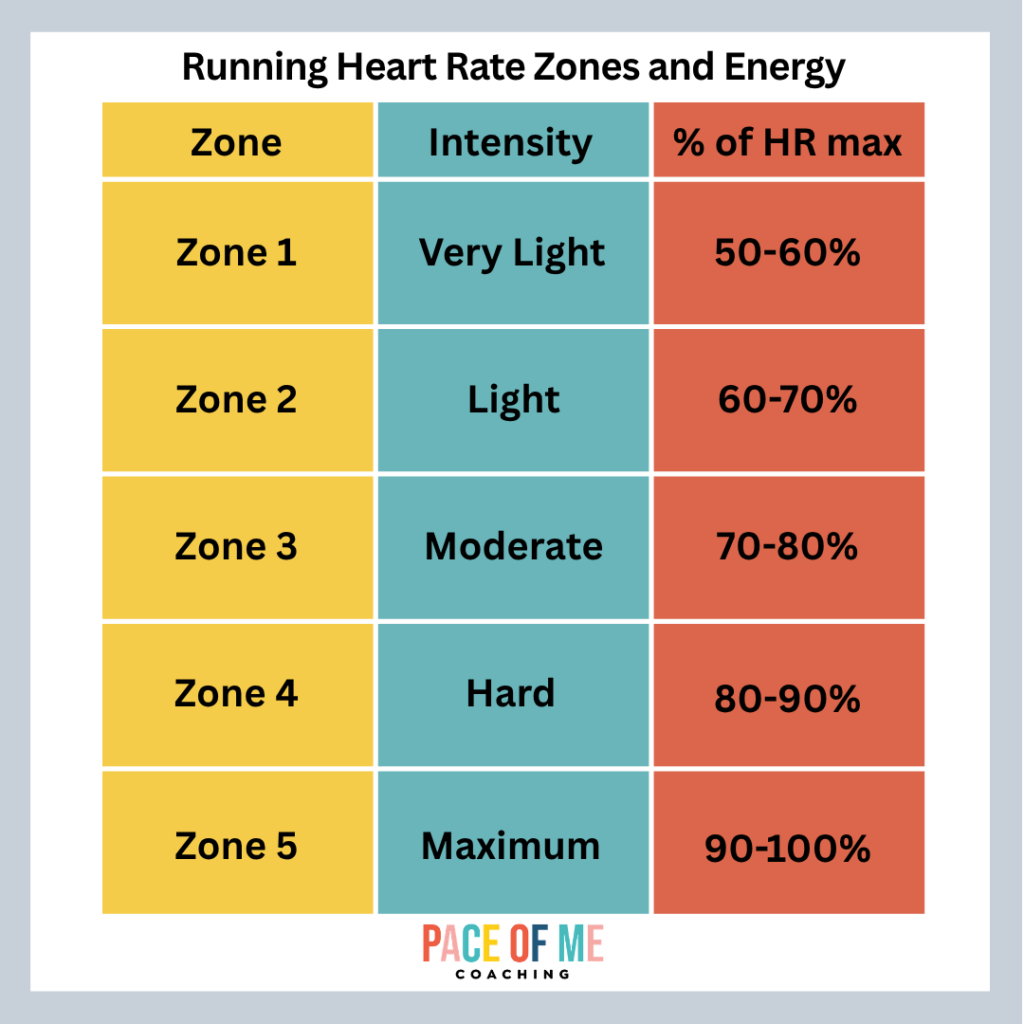
First off, let’s define what heart rate is and why it is important for runners to consider. HR is the number of times your heart beats per minute (bpm). It measures fitness and cardiovascular health. Yes it’s important, but it is not the best training tool if you aren’t factoring in other points of consideration. Below are the HR zones and energy exertion percentages.
A lot of people, including coaches, won’t just use HR as training metrics for effort as there is a lot of data instability and measurement errors are highly likely even with the latest enhancements to wrist and chest strap technologies.
The following are common sources that affect heart rate that are not effort based:
All of these are stresses to the body in various forms and will contribute to heart rate measurements. Rather than going off of this HR number, numerous coaches and athletes will refer to a Rating of Perceived Exertion (RPE) in training. This is a subjective tool used to measure how hard your body feels like it is working during physical activity and allows for adjustments based on daily energy levels.
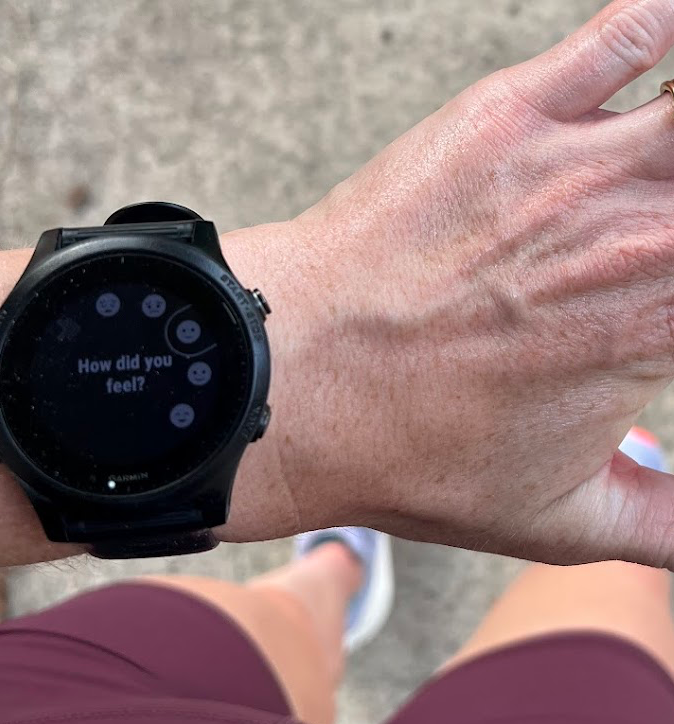
It can be extremely helpful as a runner to factor in how your effort feels compared to just what the data numbers reflect.
As we enter the warm days of spring and summer, let’s look at temperature and humidity. Our heart rate is going to be higher at the same pace compared to at lower temperature/humidity. The effort is higher when running that same pace at higher temperature because the heart has to pump more blood to the skin to cool down the body, hence less oxygen to the muscle at the same heart rate at higher temperature/humidity. Metabolically the muscle is getting less oxygen for the same mechanical work load, turning it more into an anaerobic effort.
Solely looking at HR as a measuring tool is limited. It fails to account for immediate efforts (cardiac lag) or rising effort levels during longer runs (cardiac drift). For short, high-intensity intervals, HR takes time to match the intensity and the interval may be over before the watch shows it. Heart rate responds to effort changes with a 30 to 90 second delay. On a longer run, your HR naturally increases over time because of increased body temperature. Your heart is working harder to cool the body but that number reflected back may mislead you into thinking that you are working harder than you actually are! The factors mentioned above, as well as factors like dehydration, caffeine, high altitude, etc. can skew the HR reading.

Running at altitude will impact that HR reading as your body is working harder. Thinner air = less oxygen available per breath.
We want to clarify that combining approaches for monitoring effort can help you in your training. Pace conversion charts are helpful, but as mentioned above, certain factors may lead to paces feeling off or more difficult at times.
Combining metrics will be key, because you shouldn’t rely on heart rate training alone to make decisions about your pacing.