When the goal isn’t pace, distance or splits – it’s freeing. Not every run needs to be measured or optimized. Sometimes the best miles are the ones where you just go – no beeps, no pressure, no stats. Just your breath, your stride, and the rhythm of the road or trail beneath your feet.
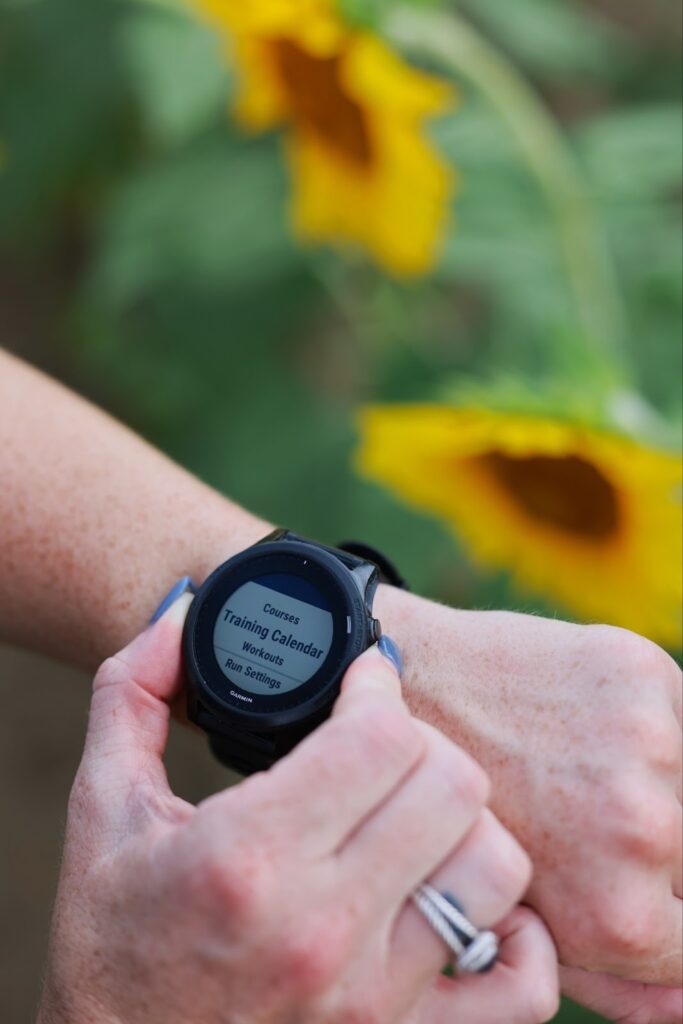
It can feel liberating to step away from the data-driven world of watch-wearing.
Running without a watch can reconnect you to why you started in the first place. To feel strong. To clear your mind. To move for the joy of it. So once in a while, leave the data behind. Run to feel not to perform. Learning how to listen to your body and honor your effort is a truly valuable skill that every runner benefits from. Not only will you discover how to feel your best and have the most fun, but you’ll also develop the ability to push for breakthrough performances!
Does the thought of leaving your watch behind make you feel anxious? Here are a few reasons why you might benefit from leaving that watch behind:
For easy, restorative runs
When the goal of the run is to feel good and be an easy effort to restore and recover, you aren’t focused as much on specific paces. Leaving that watch behind can let you settle into a rhythm that feels restorative, without the beeping … If you know your average pace for most of your easy runs, you can go out for a certain amount of minutes and have a rough idea of your distance. We promise those miles still count!

It’s a powerful tool as a runner to be able to feel out effort and listen to your body’s cue.
To Improve body awareness
It can be hard to tune into your own body when you are focused on the splits and pacing relayed back to you. Leaving the watch at home can allow you to enjoy the experience and listen better to your body’s natural cues. This is a powerful tool as a runner to be able to feel out effort as opposed to comparing a time on the clock.
To beat mental burnout
Taking a break from your watch can help find that spark of excitement to lace up and get moving if you have been feeling unmotivated or stressed. It can help rekindle your love of running by removing the pressure to record every little detail. You can’t put a number on how things feel inside. With many people connecting through social platforms logging data like Strava, it can feel like you have to keep doing more and more. But your journey is not the same as anyone else’s.

Let your community support you, but not be a space of comparison.
Coming back from injury
Take that pressure off yourself when your watch is screaming at you that you are detraining or out of shape. Ditching that watch in this comeback gives you grace and helps prevent overexertion, promoting a healthier return to running. When coming back from a break, we recommend going by time as a focus vs. a pace to focus on. For example, a run:walk plan can be helpful and a phone timer can be a fantastic tool to keep track of the time without worrying about how much distance you are covering. Without the watch, you might be less likely to compare yourself to where you have been in the past. In this data-driven world, we know it can be hard to go watch-less, but there are some many pros to trying it out!